
Let’s Talk About Our Feelings ;-)
- Julio Zarate

- Oct 31, 2025
- 5 min read
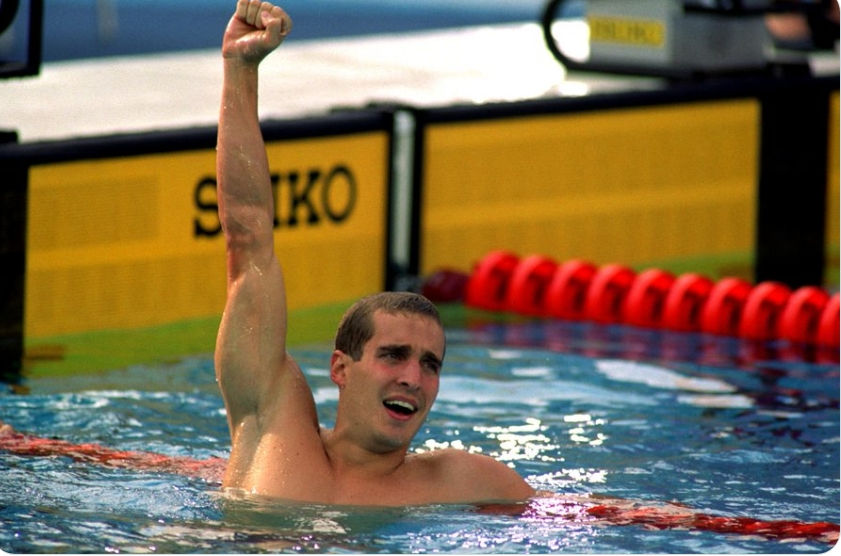
Now, before you roll your eyes, I’m not talking about emotional “feelings” here, I’m talking about physical or sensory ones.
One of my all-time favorite (and most often repeated) coaching lines is: “How you feel is overrated.” Often uttered during “taper” or meet prep time and throughout a competition weekend.
Some of you might be thinking, “Wait, my emotions don’t matter?!” That’s not quite what I’m saying, they absolutely matter and in fact play a major role in performance. (that’s a whole different conversation for another day ;-)).
The “feeling” I’m referring to is how you feel in the water. Athletes often get too caught up in how they feel physically. “I feel strong.” “I feel fast.” “This feels easy.” “This feels hard.” I hear a lot of these all year long, but it tends to pick up the closer we get to a major competition.
Those feelings can be deceiving, and they can impact performance in unexpected ways. I’ve had swimmers tell me, “Coach, I felt so fast! I don’t understand why I didn’t go a best time,” or “That felt so slow. I’m shocked I went that fast! I should have pushed harder.”
In either case the swimmer allowed how they felt to dictate the race instead of leaning on discipline, training, and strategy. Throughout my coaching career I have seen swimmer feel fast and swim slow, and feel slow and swim fast. Even if everything in your year, training, and personal life goes right you may find yourself feeling slow or weak on the day of competition. Then what? Time to make a choice...
So, what to do?
When you don’t feel fast, sharp, or “on,” that’s when your habits, preparation, and discipline have to take over. The truth is, your feelings can be unreliable, but your training isn’t. Train your skills, train your habits, train your strategies, train your body, and train your mind. Then have faith in that training.
Here are a few strategies to help you realign your focus when your body doesn’t “feel” the way you want it to:
1. Go back to your plan. Remind yourself of the strategy you’ve practiced. Focus on executing your race plan, your pacing, your turns, your stroke counts, your breathing pattern. Trust that the plan will carry you even when your body feels off.
2. Anchor to your process cues. Instead of asking, “How do I feel?” ask, “What am I doing?” Focus on controllable actions holding water, hitting your streamline, attacking your breakout. Process cues redirect your mind from feelings to execution.
3. Rely on your discipline. Discipline is doing what you need to do, regardless of how you feel. Every practice builds that muscle. When the “feel” isn’t there, discipline keeps you steady.
4. Lean on your training habits. The habits you’ve built in practice are your safety net. Trust them. Your body knows what to do, your job is to get out of its way.
5. Reframe the feeling. Sometimes not feeling great is actually a good sign, it can mean your body is working hard, or that you’re right where you need to be to perform. The key is not to interpret that discomfort as failure. A perfect example of this is Katie Ledecky. Katie has convinced herself that she is swimming her best once it starts to hurt. Tell yourself the uncomfortable or bad feeling is beneficial, and it will be.
6. Compete anyway. The best athletes know how to perform through the “off” days. They don’t wait to feel good they find a way to be good no matter what.
The next time you catch yourself thinking, “I don’t feel fast today,” take a breath, narrow your focus, and go to work. Let your habits and preparation do the heavy lifting, your feelings will catch up later.
I wrap this up with a story, a story that my coach told me when I was young, and now I’m gonna tell it to you;-) Like most good coaching stories, a few of the finer details may have blurred with time, but the heart of it remains the same. The events might not be perfect down to the last fact, but the message, the reason it’s told, is what really matters.
So, the story goes, at least how I remember it.
I was 14 and had just finished a bad swim. Frustrated, I told my coach, “I just didn’t feel fast.”
He sat down next to me and told me a story about Mike Barrowman.
From ages 11 to 18, I swam for Curl-Burke Swim Club, a program that produced several Olympians and world record holders. Mike Barrowman was one of them. My coach said that after the 1988 Olympics in Seoul, where Barrowman had been a favorite but finished fourth, he came back to race at the National Championships the following year, eager to prove himself.
As the story goes, the moment Mike dove in, he knew something felt off. Every stroke of that first 50 was a grind. It wasn’t clicking. This wasn’t going to be a “good” swim. After a year of training, focus, and pressure, he found himself in the final heat at Nationals and he just didn’t feel fast.
That’s a moment every swimmer understands. At that point you have a choice: back off, accept it’s not your day or push through and see what’s left in the tank.
Mike chose to push. He fought through every stroke, even though it felt wrong and hard the whole way. He leaned on his training, grit, discipline to move one 50 at a time. When he finally touched the wall and looked at the clock, he saw that he had broken the world record for the first time.
He would go on to break it six more times in his career, lowering it from 2:13.34 (Victor Davis, Canada) to 2:10.16 redefining what people thought was possible in the 200 breaststroke and becoming a legend in the process. He would go on to win gold at the World Championships in Perth 1991 and Olympic Gold in Barcelona 1992.
Imagine if he had let that “feeling” decide for him that day. Would he have ever broken the record? Maybe, maybe not… At a time where swimmers rarely swam past one Olympic games that choice to push when it didn’t “feel” good set Mike Barrowman on a course that would change the history of the sport.
How you feel is overrated.


Comments